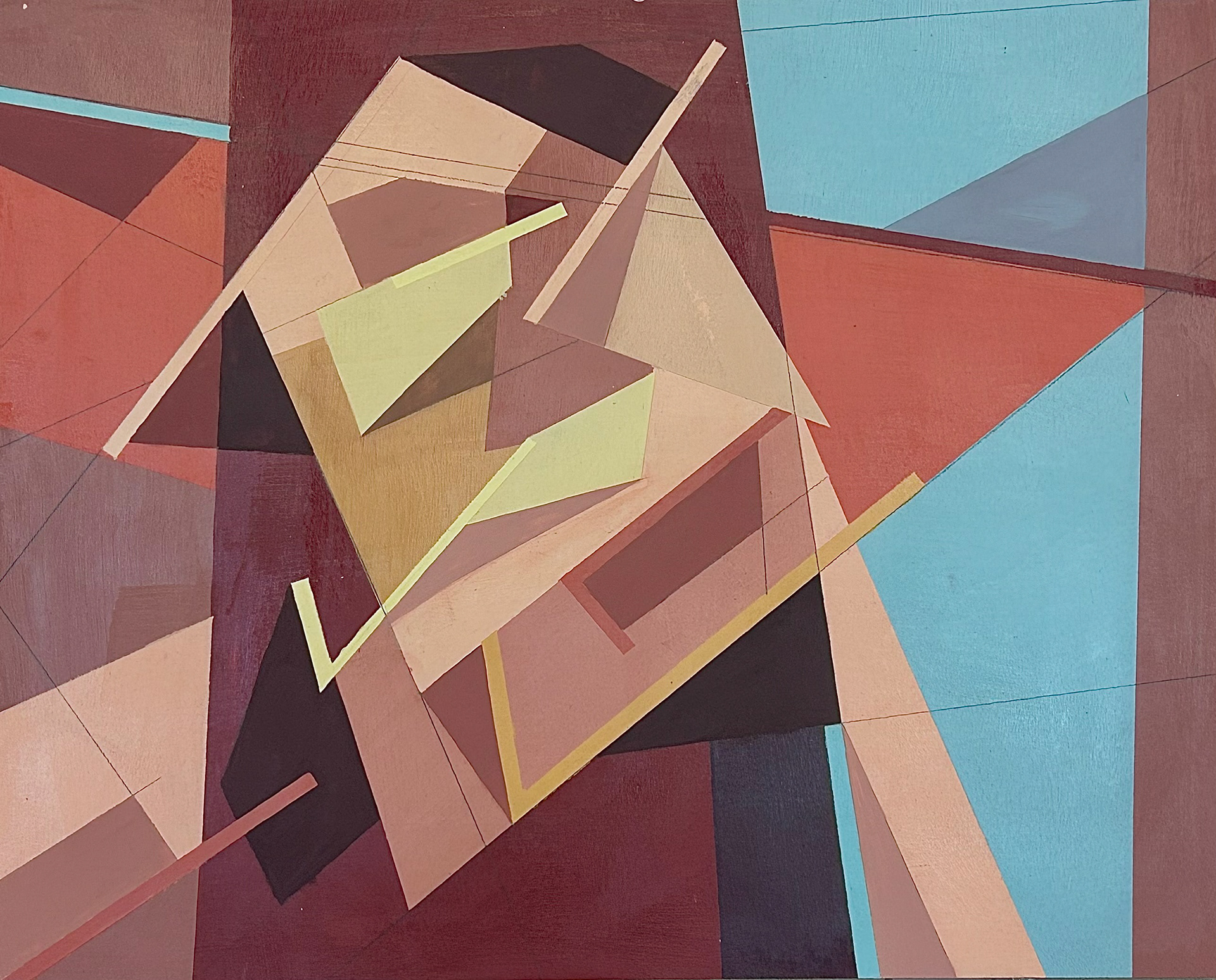
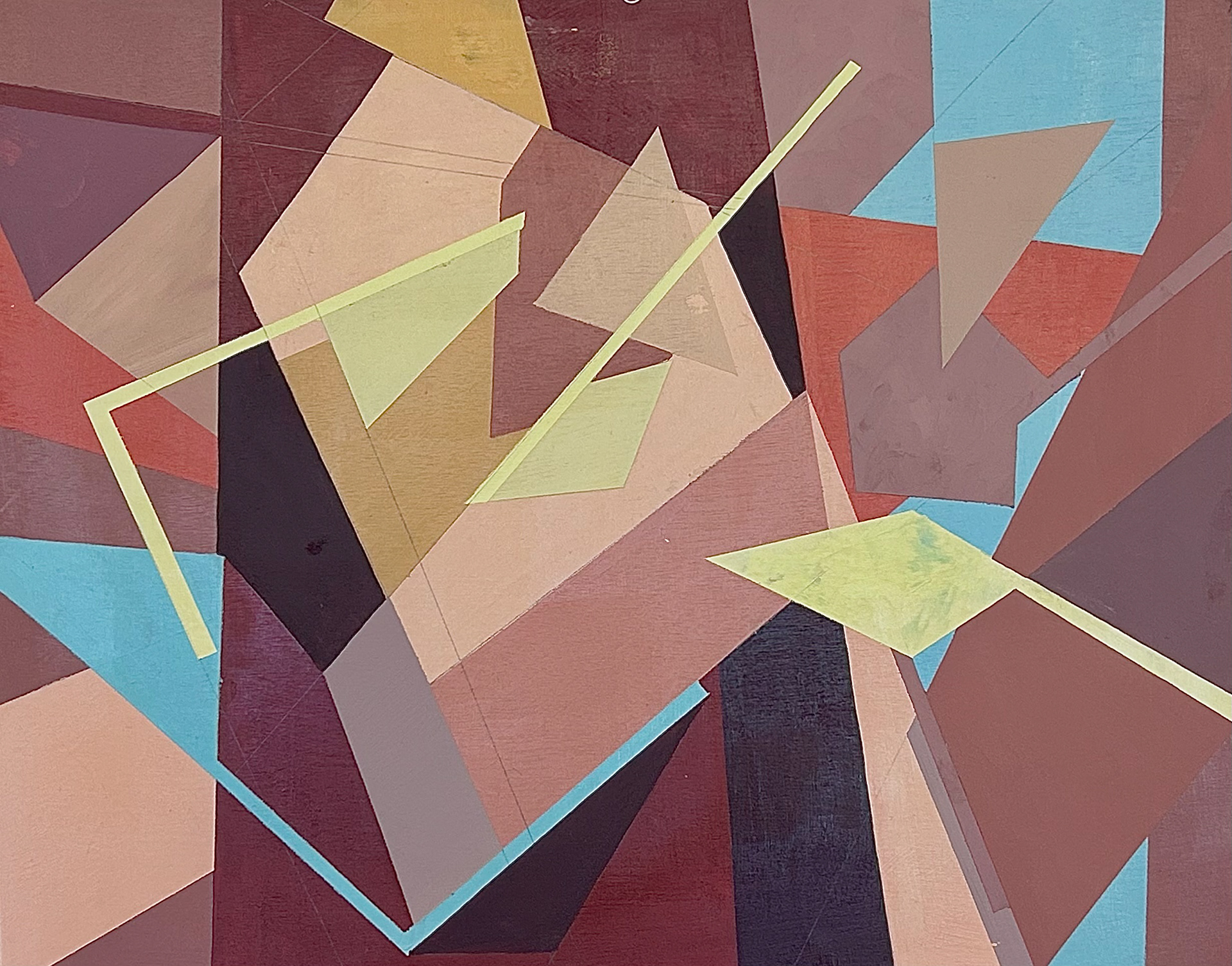
Cubist painting does not construct space — it depicts it. But what if that depiction contains more than the painter intended? In the fragmented planes, shifting perspectives, and layered transparencies of Braque and Gris, there exists an architectural logic that has never been fully extracted or inhabited. The painting shows space, but has never been made to build it. This research does exactly that: using the Cubist canvas as both a primary document and a generative device, it is excavating the hidden spatial programs embedded within these paintings and translating them into architectural environments — specifically, the garden as a spatial framework.
The Cubist painting becomes a plan, a section, a site. Through close reading of compositional structure — the overlapping planes, the simultaneous viewpoints, the ambiguity between figure and ground — this research discovers rooms, thresholds, enclosures, and sequences that the painters themselves may not have consciously intended. The garden, as a spatial genre, becomes the ideal container for this translated architecture: it is at once bounded and open, programmatic and interpretive, figured and abstract. The result is a series of painted spatial speculations that complete what the painting started — asking not just what space is depicted, but what space was always already inside the painting, waiting to be built?
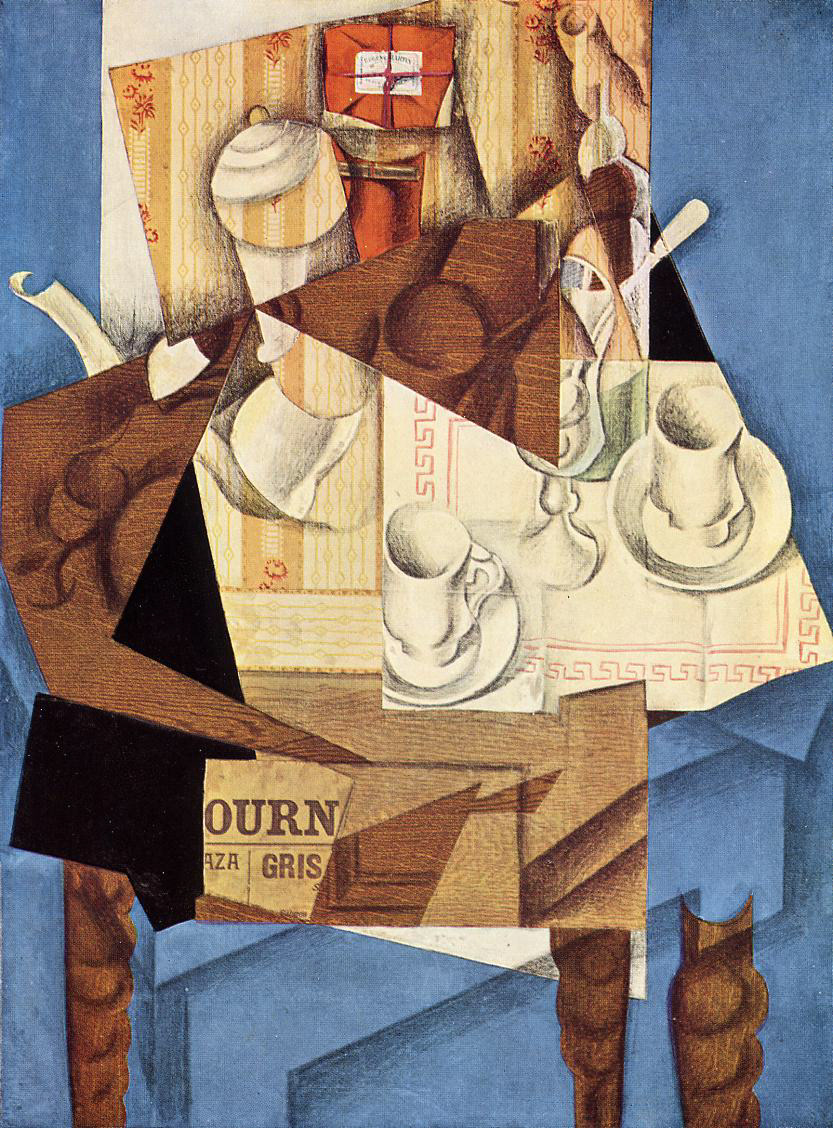
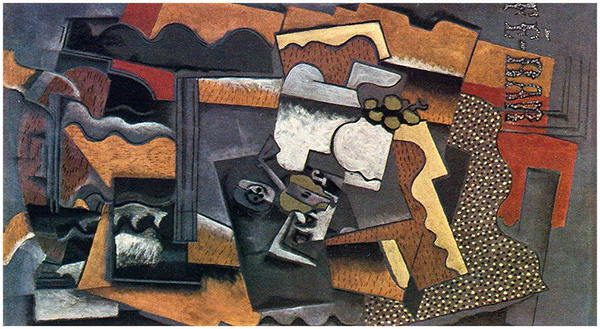
Breakfast (Le Petit déjeuner) (1914) - Juan Gris
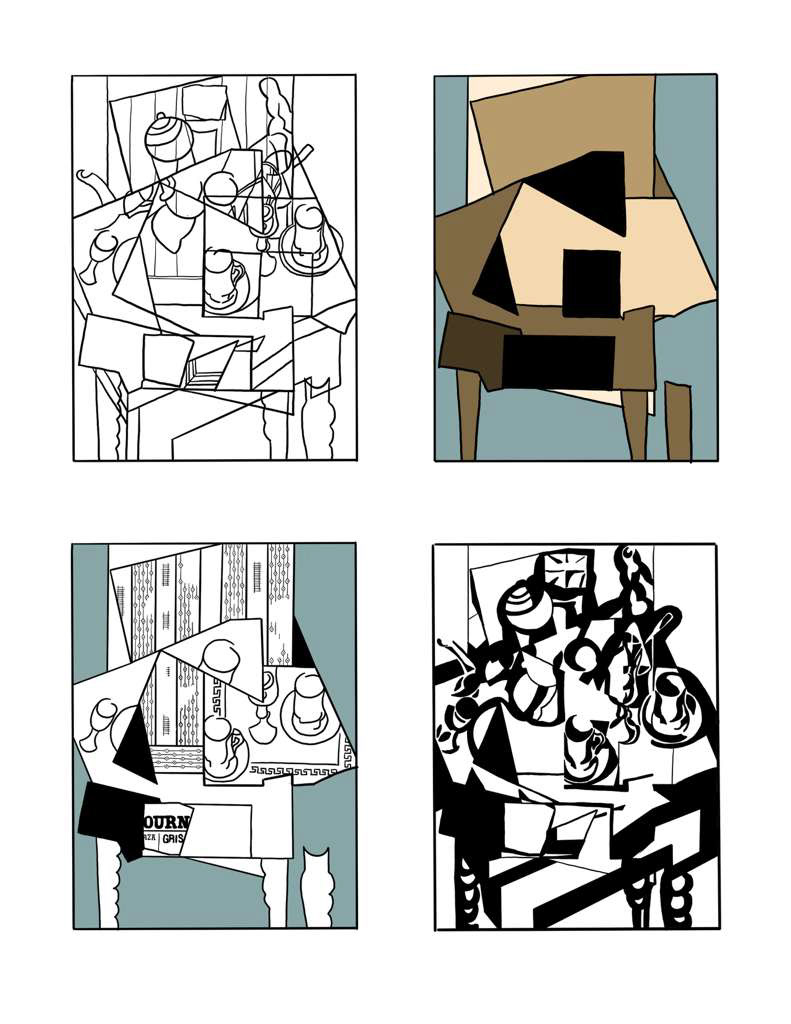
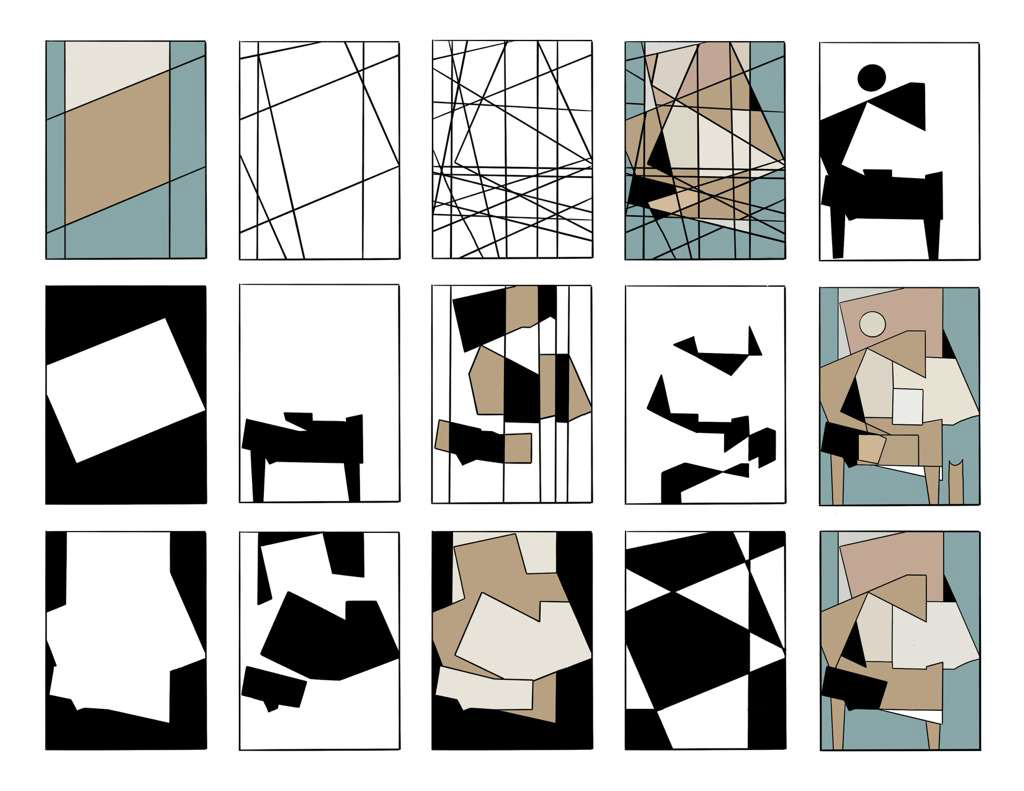
This is my analysis of the Breakfast by Juan Gris.
I'm breaking it down in layers — line drawings, color field reductions, figure-ground studies, different compositional readings. I'm looking for how space is stacked. Where does depth happen, and where does it collapse flat? Where do planes overlap and create ambiguity — you can't tell what's in front and what's behind. Rowe and Slutzky call this phenomenal transparency — the simultaneous perception of different spatial layers occupying the same territory. That ambiguity isn't a flaw. It's a spatial proposition.
The paintings operate in two simultaneous registers:
1. Analysis → Excavation
2. Translation → Garden
Still Life on a Table (1918) - Georges Braque
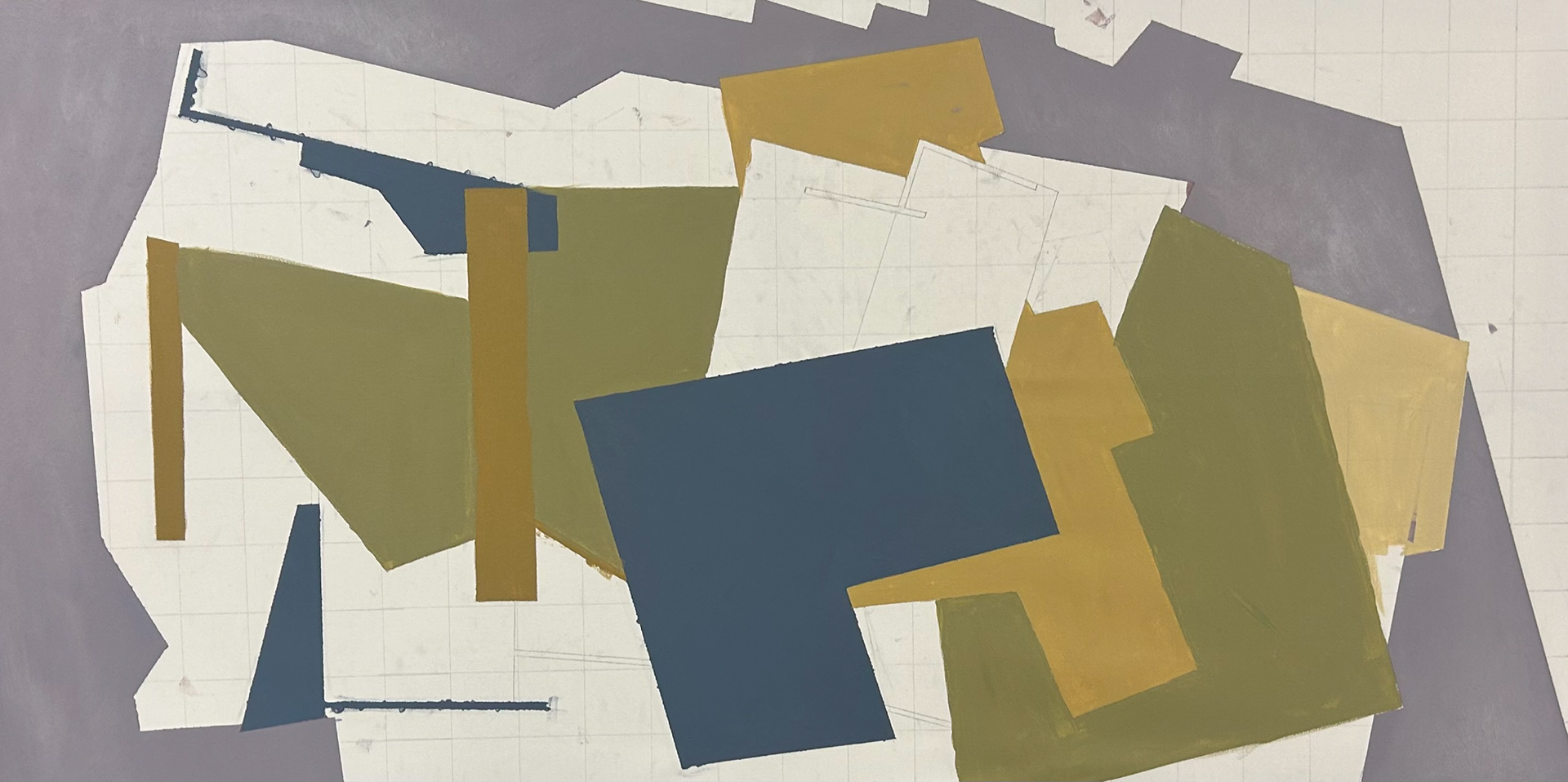
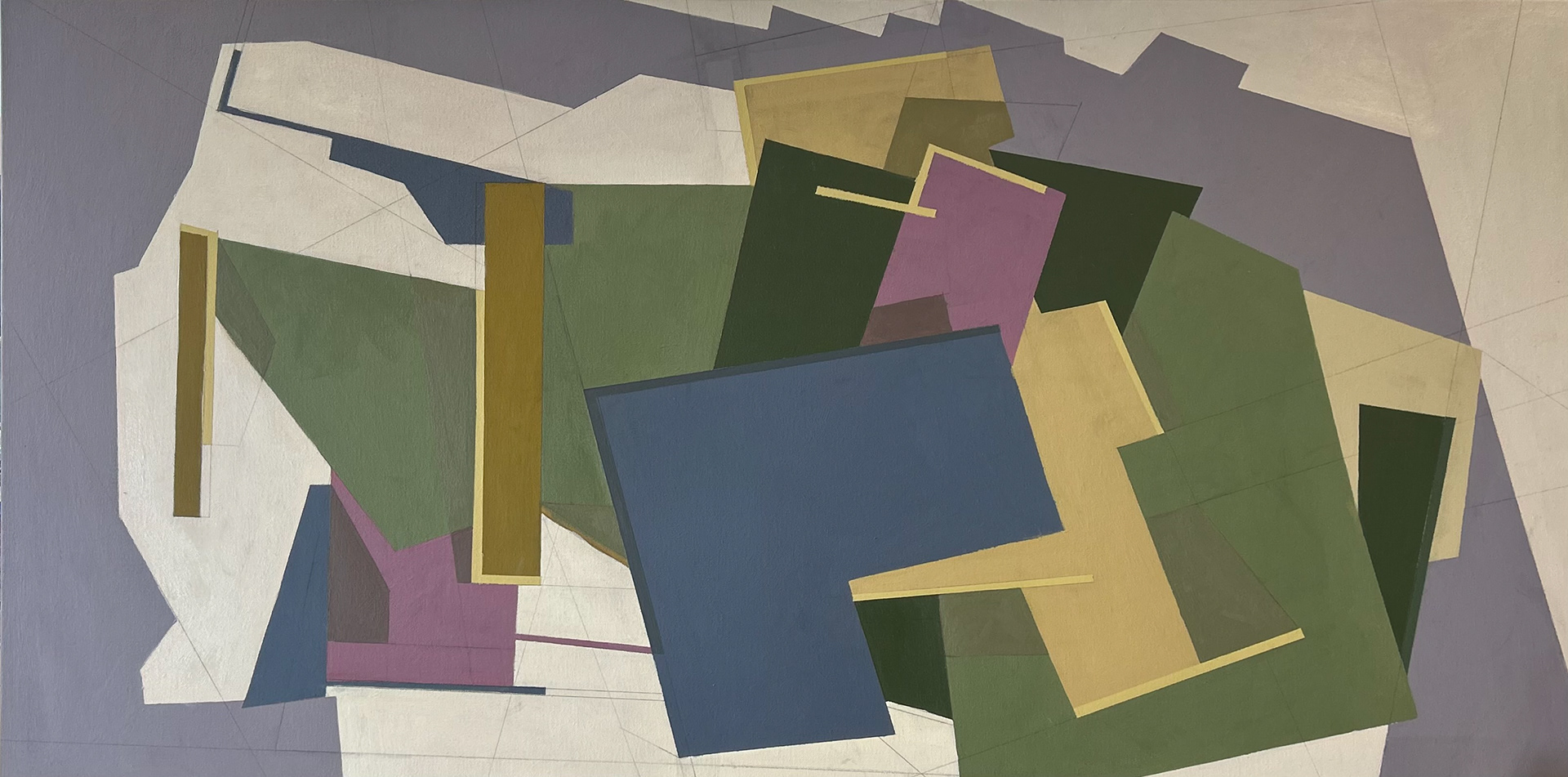
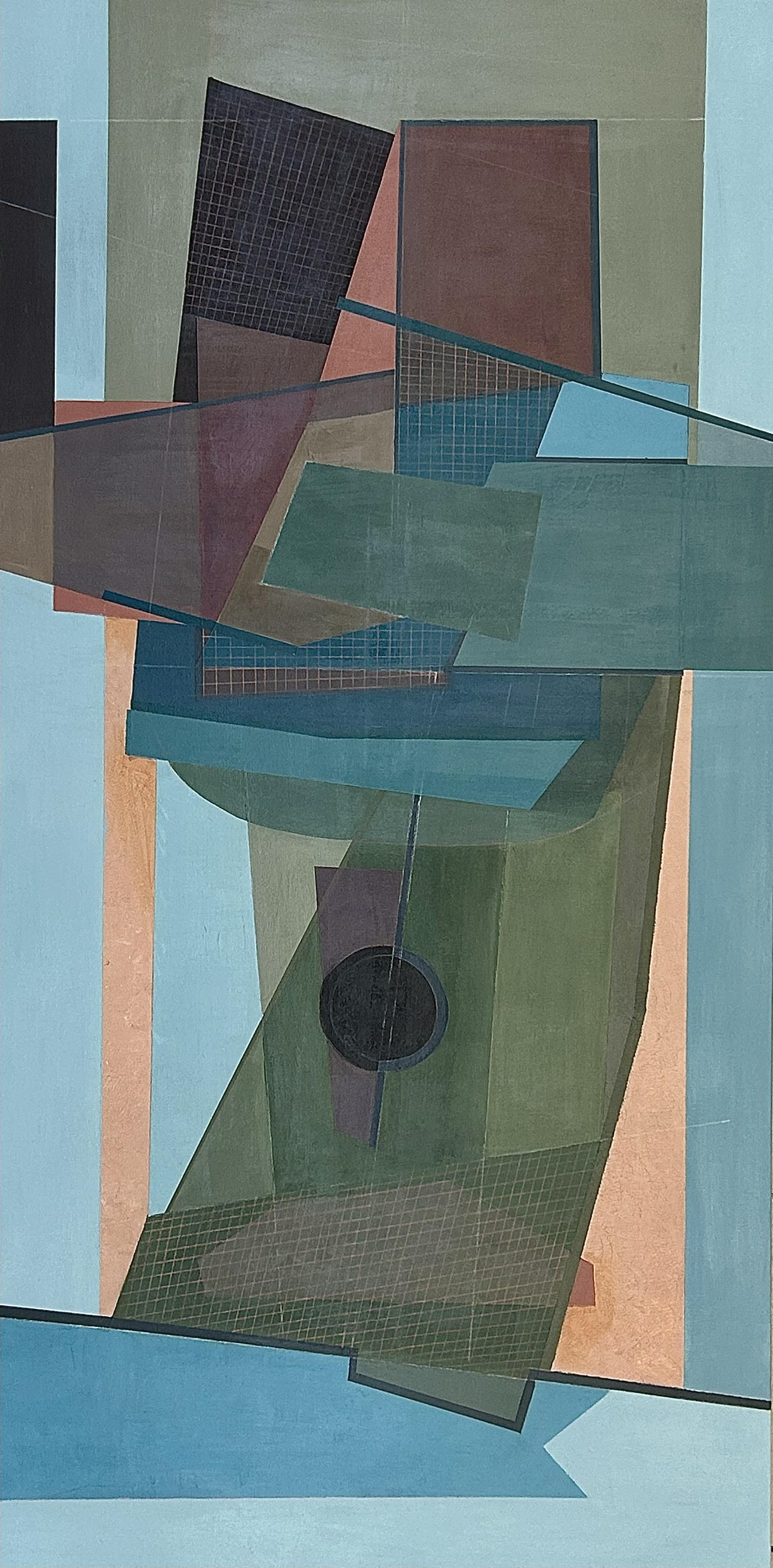
I always start with color blocking. These blocks establish the major spatial zones I've identified from the analysis: what reads as foreground, what reads as deep space, where the ambiguity lives. Corbusier writes that in a complete work there are "hidden masses of implications — a veritable world which reveals itself to those whom it may concern." The garden is already in the painting. The color blocking is me starting to make it visible.
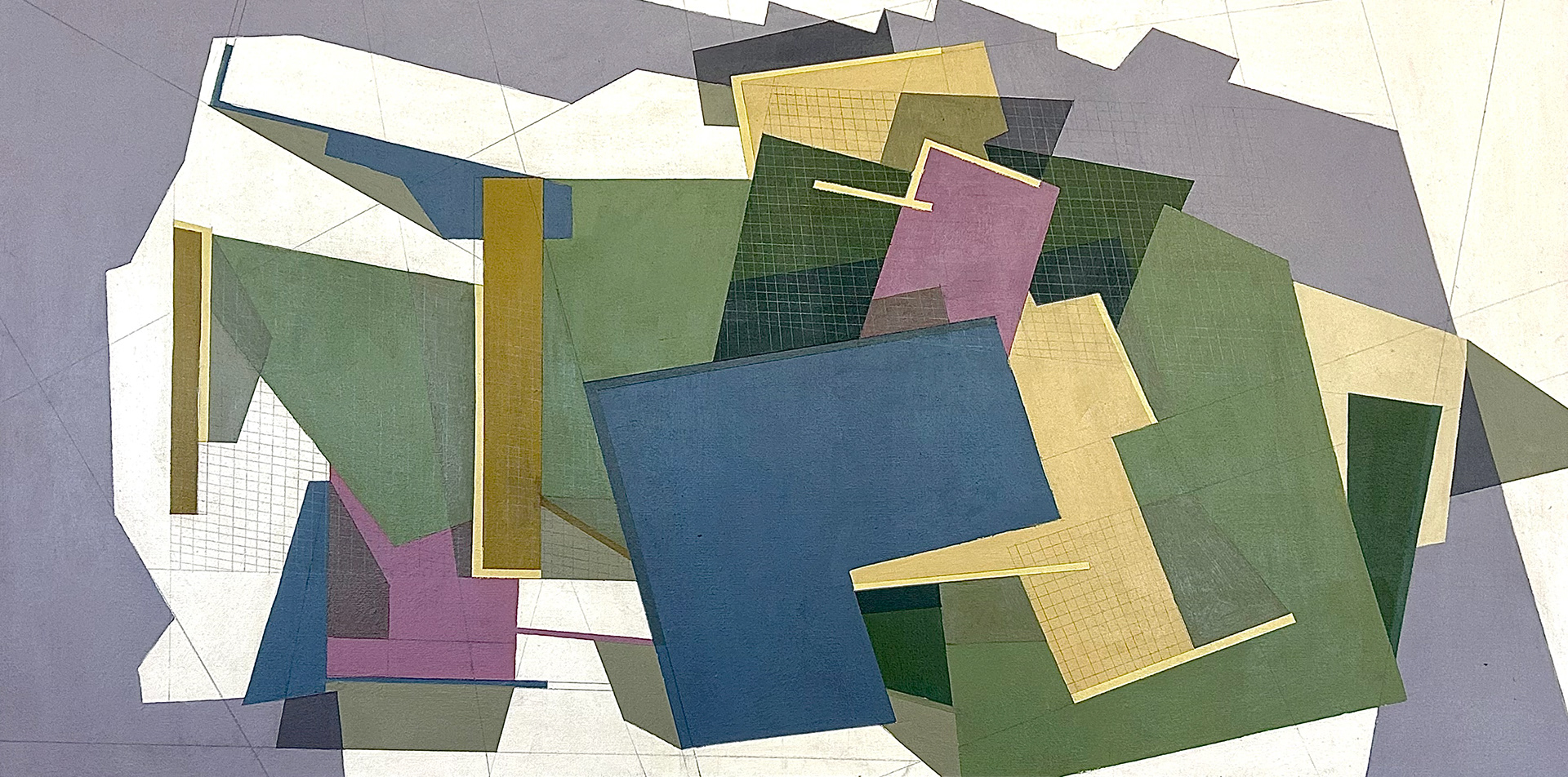
I start building up layers. This is where color becomes spatial. I start introducing texture and pattern. The grid is functioning as a spatial marker — it reads like a floor plane, or a surface condition, distinguishing one zone of space from another. It's directly referencing the way Braque used patterned surfaces in his own paintings to mark different material zones.
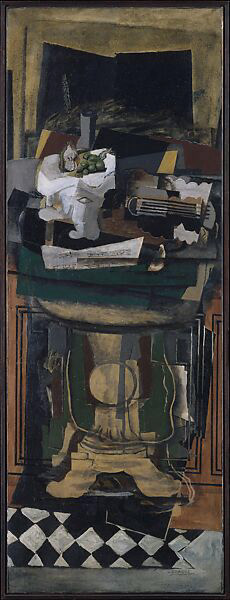
Guitar and Still Life on a Guéridon (1922) - Georges Braque
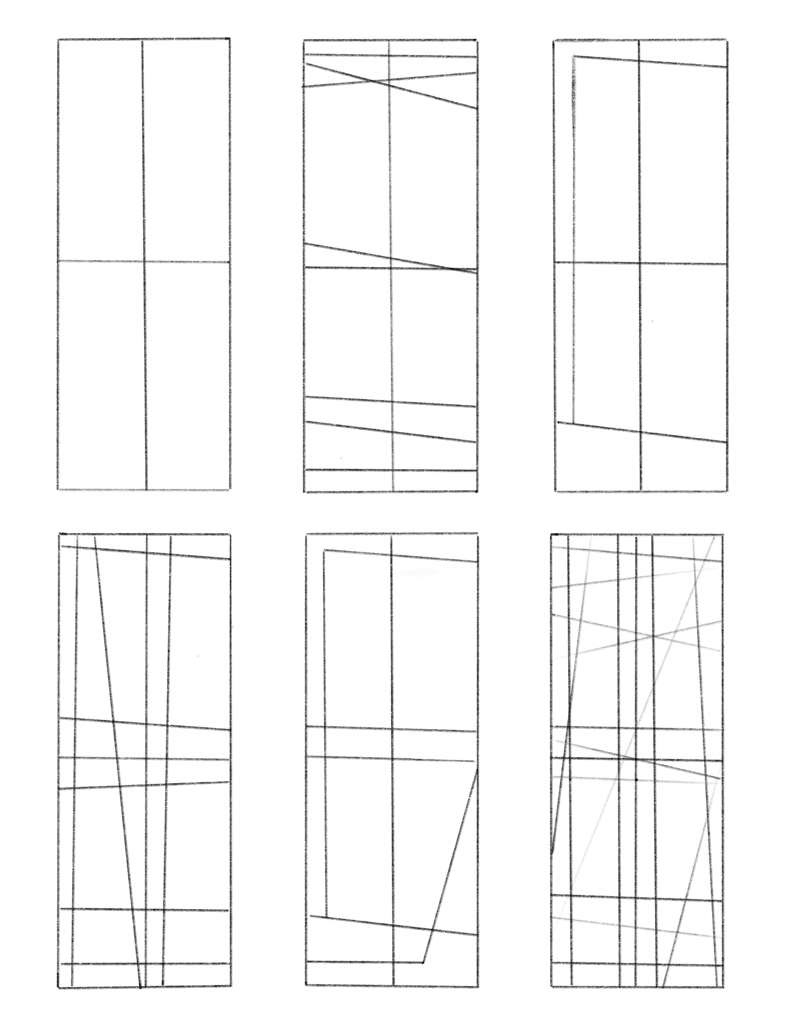
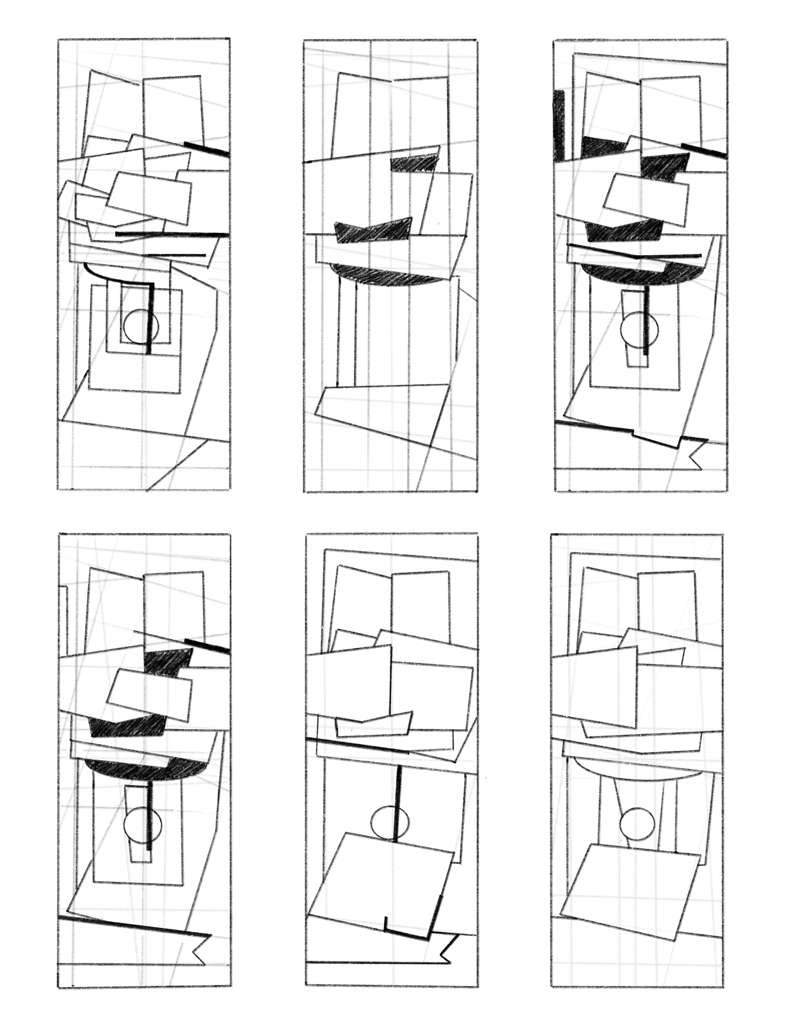
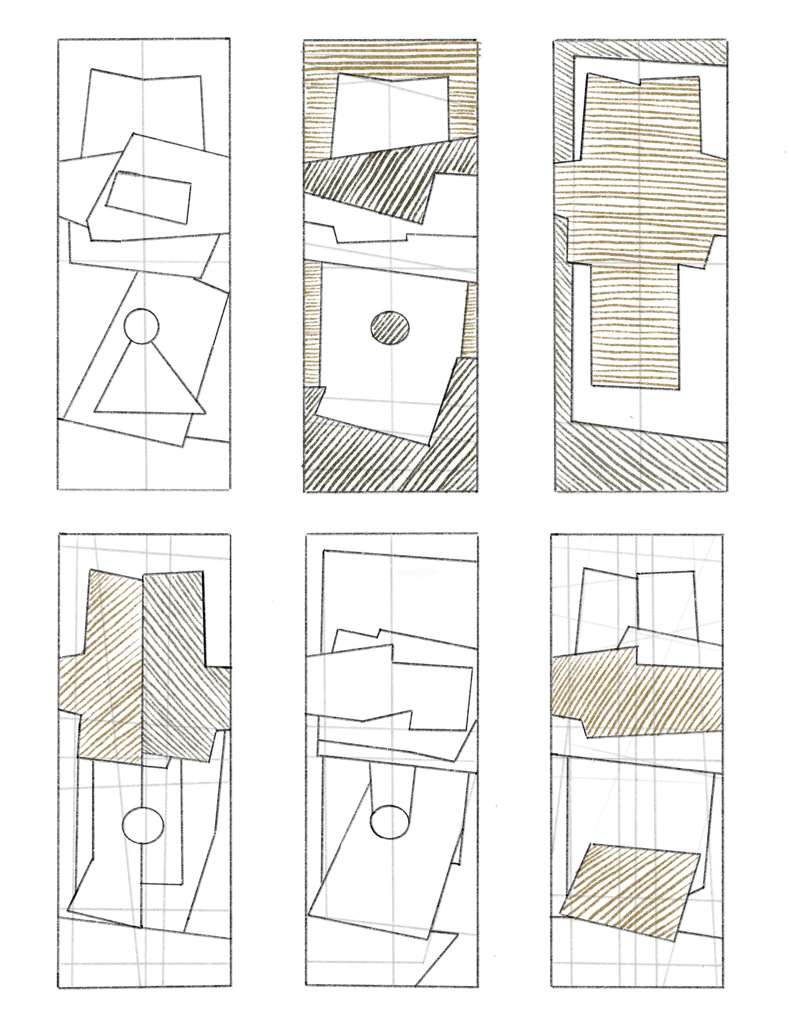
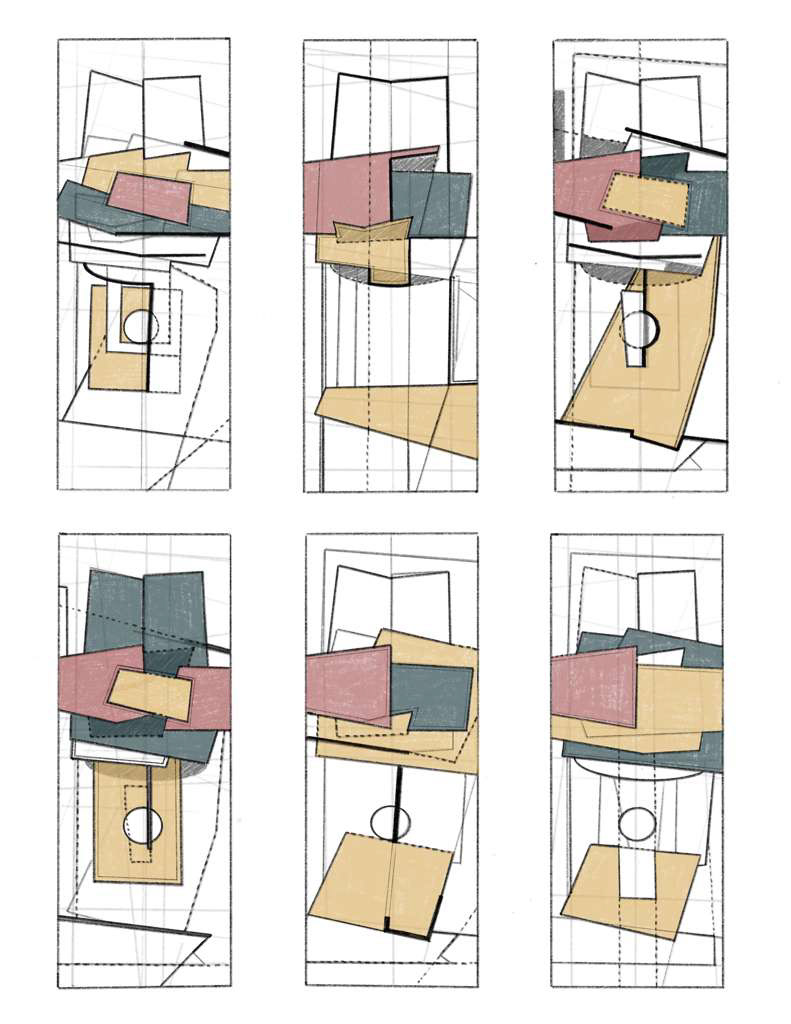
The analysis here focused on the vertical organization — how the painting stacks zones. I was looking at the regulating lines, how the central column acts as a datum, and how the space radiates and compresses around it. They start to become more architectural — reading the painting in black and white, warm and cool, to isolate where the spatial layers are. You can start to see rooms and enclosures emerging just from the compositional logic of the painting itself.
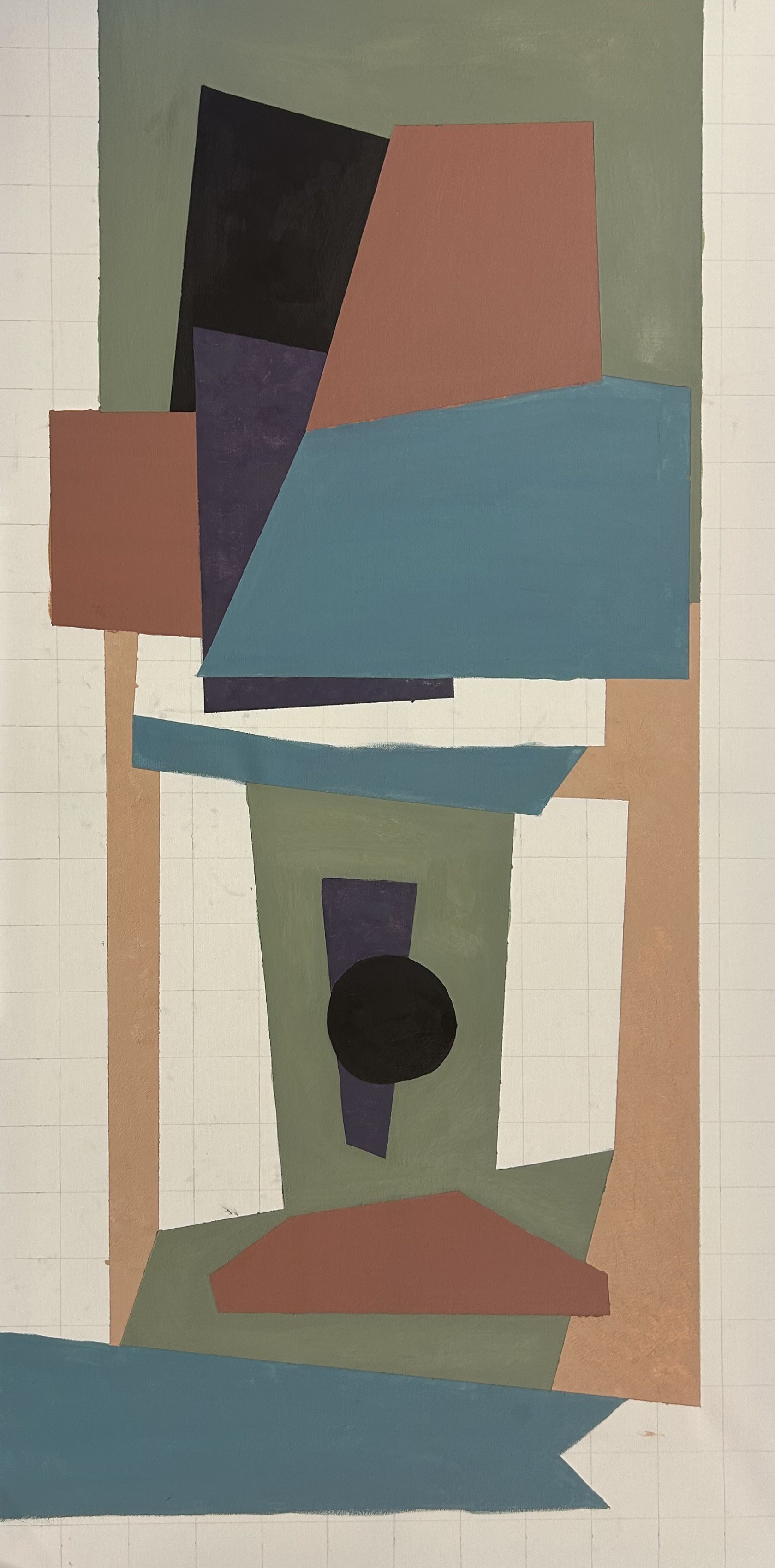
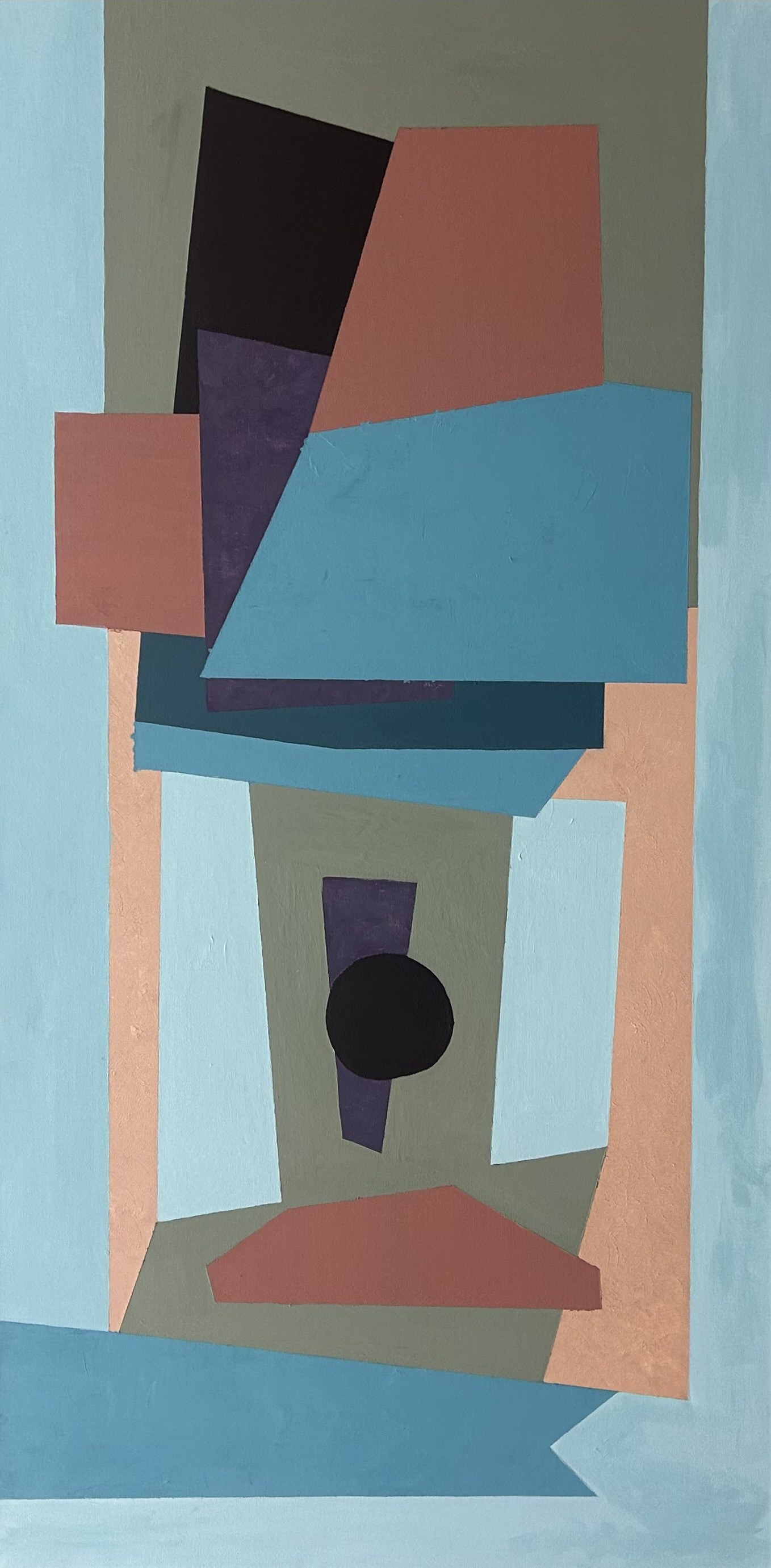
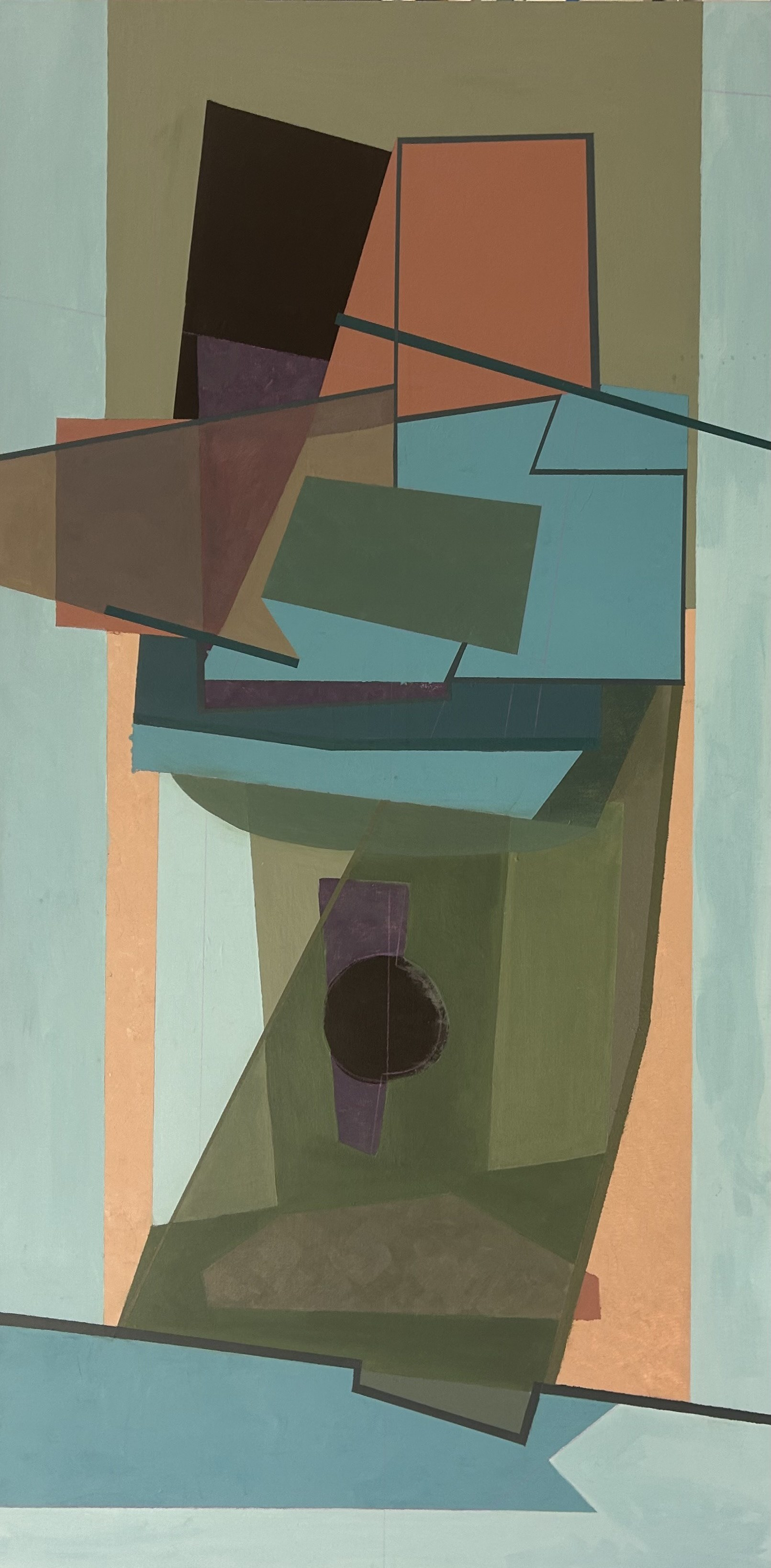
Here you can see three states of the painting side by side during the process. Left is the color block, middle is with the background filled in, right is when I start introducing translucency — glazing layers over each other so you can see through one plane into the next. That overlap is where the garden ambiguity lives. You can read it as two separate spaces, or as one continuous space with a threshold in between.